Best Bus Power USB Hubs of 2026

* We independently evaluate all recommended products and services. If you click on links we provide, we may receive compensation.
Bus Power USB Hubs are a range of USB hubs designed to provide additional USB ports for your computer or laptop. These hubs are powered by the USB port on your device, eliminating the need for an external power source. They come in a variety of sizes and configurations, allowing you to choose the one that best suits your needs. With Bus Power USB Hubs, you can easily connect multiple USB devices to your computer, including printers, scanners, external hard drives, and more. They are a convenient and practical solution for anyone who needs to expand their USB capabilities.
At a Glance: Our Top Picks
 #TOP 1
 9.8
9.8
 #TOP 2
9.7
#TOP 2
9.7
 #TOP 3
9.5
#TOP 3
9.5
Top 3 Bus Power USB Hubs
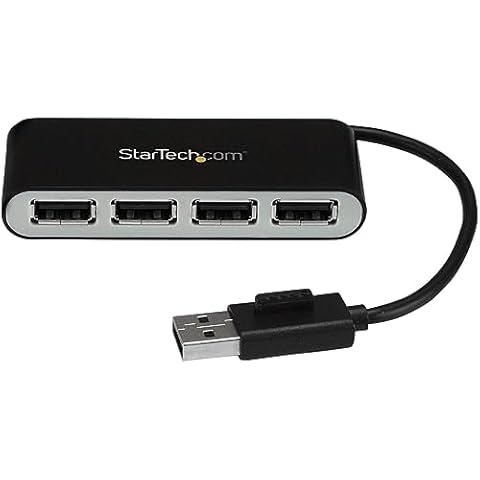
StarTech.com 4 Port USB 2.0 Hub for Travel
The StarTech.com USB 2.0 Hub expands your laptop or desktop's capabilities by adding four extra USB 2.0 ports, allowing you to connect multiple devices seamlessly. Its compact design and built-in cable make it ideal for travel, meaning you can easily take it wherever you go. With up to 480Mbps throughput, you can enjoy fast data transfers. Plus, the extra port spacing accommodates larger USB connectors, ensuring all your devices fit comfortably.
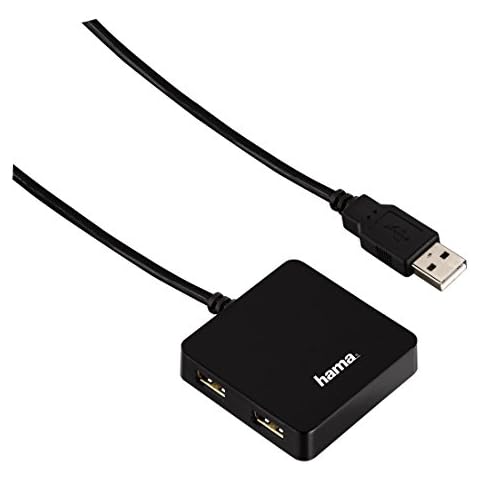
Hama Multiquad 4-Port Bus Powered USB Hub
The Hama Multiquad USB Hub lets you connect up to four USB devices, such as a mouse, keyboard, printer, or memory stick, to a single USB port on your computer. It features well-spaced sockets, making it easier for you to plug in larger USB plugs and dongles without hassle. Being bus powered means it draws power directly from your PC or notebook’s USB socket, so you won’t need an extra power supply. This handy device is ideal for expanding your connectivity with minimal clutter and fuss.
StarTech.com 4-Port USB 3.0 Hub
The StarTech.com USB Hub is a versatile device that expands a single USB-A port into four, allowing you to connect multiple peripherals effortlessly. It features overcurrent protection and shares up to 4.5W of power across its ports, ensuring safe and efficient operation. Additionally, you can use an auxiliary power input for high-demand devices like SSDs, making it ideal for users with various needs. The extra-long 1ft (30cm) cable simplifies setup and reduces strain on your device's connectors.

Frequently Asked Questions (FAQs)
1. What is bus powered USB hub?
A bus-powered hub (passive hub) is a hub that draws all its power from the host computer's USB interface. It does not need a separate power connection. However, many devices require more power than this method can provide and will not work in this type of hub.
2. What is the difference between self powered and bus powered USB hubs?
Self-powered hubs derive their power from a wall outlet and usually provide up to 500 milliamps (mA) at each port. In contrast, bus-powered hubs obtain all their power from the one USB port they plug into.
3. Do USB hubs provide power?
Powered USB hubs provide their own power supply for devices. Typically, when you connect a device to your computer via USB, the device draws upon your computer's power to function. Powered USB hubs come with their own power source and provide power for your connected devices so your computer doesn't have to.
4. Is it better to get a powered USB hub?
Because a powered hub uses mains power, it can give every device connected to it the maximum voltage that USB allows. So, not only can it run more devices than an unpowered hub, it can do so at full power, without any drops in performance.
During our bus power usb hub research, we found 78 bus power usb hub products and shortlisted 3 quality products. We collected and analyzed 64,020 customer reviews through our big data system to write the bus power usb hubs list. We found that most customers choose bus power usb hubs with an average price of £19.27.
The bus power usb hubs are available for purchase. We have researched hundreds of brands and picked the top brands of bus power usb hubs, including StarTech, Hama.
Kenneth Collin graduated from Imperial College, London, at 22. He is a UX/UI designer, a web developer, and a writer, amongst others. At age 14, Kenneth programmed his first app. Kenneth's app served as a remote control for censored devices. "When I was 8, I would pick up scraps from electronics and try to rebuild or at least fix them," Kenneth said in one of his recent articles on Home repairs for top gadgets.