Best Polariser Photography Polarizing Filters of 2026

* We independently evaluate all recommended products and services. If you click on links we provide, we may receive compensation.
Polariser Photography Polarizing Filters are a must-have accessory for any photographer who wants to capture stunning outdoor images. These filters are designed to minimise glare and reflections, resulting in images that are sharper, more vivid and with richer colours. They work by blocking out light waves that are reflected off non-metallic surfaces such as water, glass, and foliage. This makes them ideal for landscape, architecture, and portrait photography. With a range of sizes and styles available, Polariser Photography Polarizing Filters can be used with a variety of camera lenses to achieve the desired effect.
At a Glance: Our Top Picks
 #TOP 1
 9.8
9.8
 #TOP 2
9.7
#TOP 2
9.7
 #TOP 3
9.5
#TOP 3
9.5
Top 4 Polariser Photography Polarizing Filters
K&F Concept 67MM Ultra Slim Polarising Filter
The K&F Concept CPL Filter is designed to enhance your photography experience. Made from high-quality Japan optical glass, it deepens the intensity of blue skies and reduces glare, allowing you to capture stunning landscapes. The multi-coating feature helps to minimise reflections and improve colour saturation, ensuring your images are vibrant and true to life. Its ultra-slim aluminium alloy frame prevents vignetting on wide-angle lenses, making it ideal for various photography styles. You’ll appreciate how this filter dramatically enhances natural elements like skies, waters, and foliage.
PROfezzion 58mm Circular Polarising Filter for Cameras
The PROfezzion Polarizing Filter helps you remove unwanted reflections thanks to its high-rate transparency polarising film, improving clarity in your photos. With premium Japanese optical glass featuring a hardness rating of 9HD and six layers of coating on each side, it reduces ghosting and reflections for sharper images. Its ultra-slim aluminium alloy frame prevents vignetting on wide-angle lenses, allowing you to adjust the polarising effect smoothly. This filter also enhances contrast by cutting glare from non-metallic surfaces like water and glass, boosting colour saturation and making skies and clouds more dramatic.
Selens Linear Polarising Film Sheet 20x30cm
The Selens Polarising Film is a high-quality linear polariser that converts natural light into polarized light with an impressive 99.99% polarization rate. This makes it ideal for physics experiments involving birefringence, light scattering, and reflection. It also helps reduce glare and reflections on electronic devices, cars, and photography equipment, improving light saturation without compromising clarity. Made from premium materials, the film offers excellent light transmittance and can be cut to your preferred shape. The adhesive backing allows easy application and removal, making it convenient to use on various surfaces.
NEEWER 67mm Circular Polarising Filter with Nano Coatings
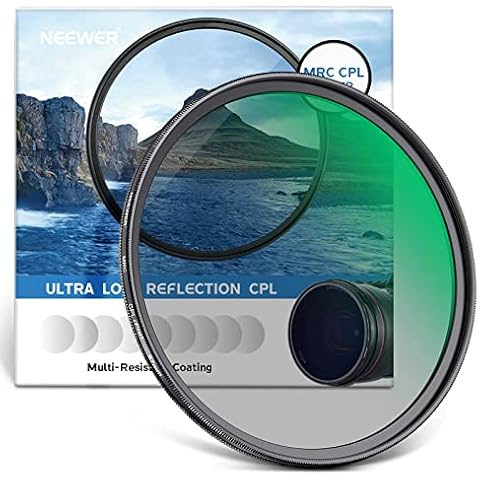
The NEEWER 67mm CPL Filter enhances your photography with natural colour improvement, boosting contrast and saturation to make your images more vivid. It effectively eliminates glare from surfaces like water, sky, and plants, ensuring your shots have rich colours and fine details. The high-definition optical glass offers clear visuals with minimal light reflection, helping you capture accurate colours even in tricky lighting. Its 30-layer multi-resistant coating protects against water, dust, and scratches, making the filter easy to clean and durable in harsh conditions. This filter is ideal for photographers seeking sharper, clearer photos with less glare and better colour depth.

Frequently Asked Questions (FAQs)
1. What does a polariser filter do?
We can use polarizing lenses to reduce glare. Light reflecting off horizontal surfaces like the road, water, or snow is horizontally polarized. A polarizing filter oriented vertically will filter out the glare, but still allow plenty of light through. A polarizing filter on your camera helps reduce shiny reflections.
2. When should you not use a polarizing filter?
Bear in mind that a polarising filter will reduce the amount of light reaching your camera's sensor by as much as two or three f-stops, so you should avoid using one in low light situations. This includes during blue hour, when shooting at night, or when photographing the Aurora Borealis.
3. Can you leave a polarizing filter on all the time?
Do you tend to leave your polarizing filter on all the time? I certainly did! Try leaving it in the bag for your next couple trips, and when you are tempted to pull it out, see if you can find a better composition that leverages or replaces the reflective surfaces.
During our polariser photography polarizing filter research, we found 241 polariser photography polarizing filter products and shortlisted 4 quality products. We collected and analyzed 79,648 customer reviews through our big data system to write the polariser photography polarizing filters list. We found that most customers choose polariser photography polarizing filters with an average price of £15.65.
The polariser photography polarizing filters are available for purchase. We have researched hundreds of brands and picked the top brands of polariser photography polarizing filters, including K&F CONCEPT, PROfezzion, Selens, NEEWER.
Kenneth Collin graduated from Imperial College, London, at 22. He is a UX/UI designer, a web developer, and a writer, amongst others. At age 14, Kenneth programmed his first app. Kenneth's app served as a remote control for censored devices. "When I was 8, I would pick up scraps from electronics and try to rebuild or at least fix them," Kenneth said in one of his recent articles on Home repairs for top gadgets.